
1. What is Floor Filter (Paint-Stop) and What Does it Do?
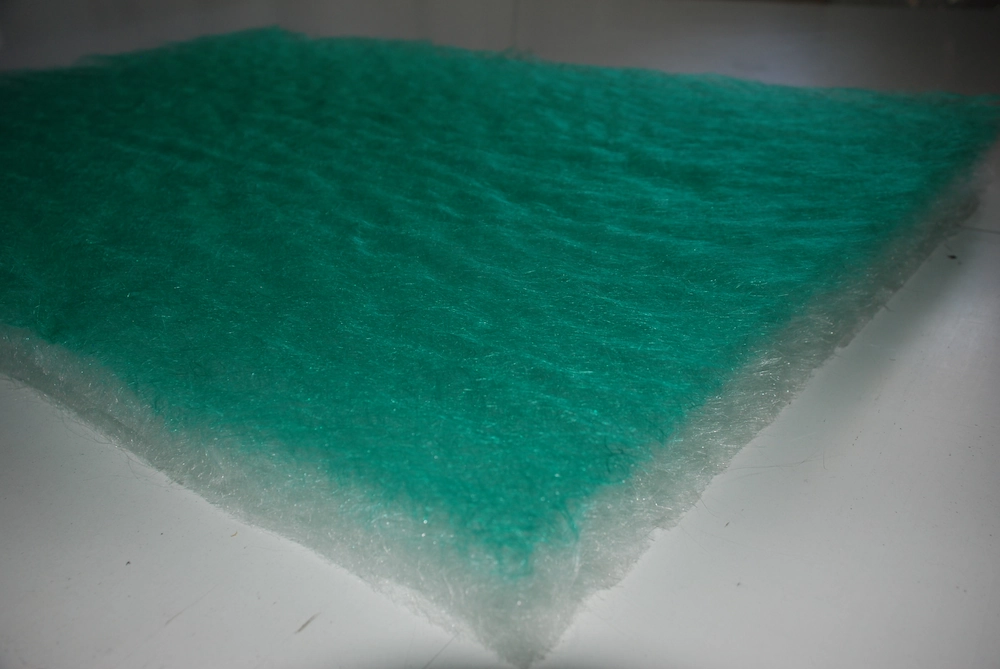
Floor Filter (Paint-Stop / Paint Arrestor) is a flexible fiberglass filtration media designed to capture wet or dry paint overspray, laid underneath floor grates in automotive body shops, furniture lacquering workshops, and industrial wet painting booths.
Not all paint exiting the spray gun adheres to the workpiece. Airborne paint mist (overspray) is drawn down toward the floor by exhaust fans under the booth. If a Paint-Stop filter with proper technical specifications is not used on the floor:
- Sticky paint particles adhere to exhaust fan blades, throwing the motor off balance and burning it out.
- Ventilation ducts and stacks become coated with solvent paint residues, creating a severe fire hazard.
- Negative pressure balance inside the booth is disrupted, exhaust power drops, and dust settles on freshly painted surfaces.
2. How Should the Green and White Sides Be Positioned?
Paint-Stop floor filters are dual-colored, and placing them in the correct orientation is the most critical aspect for filtration performance:
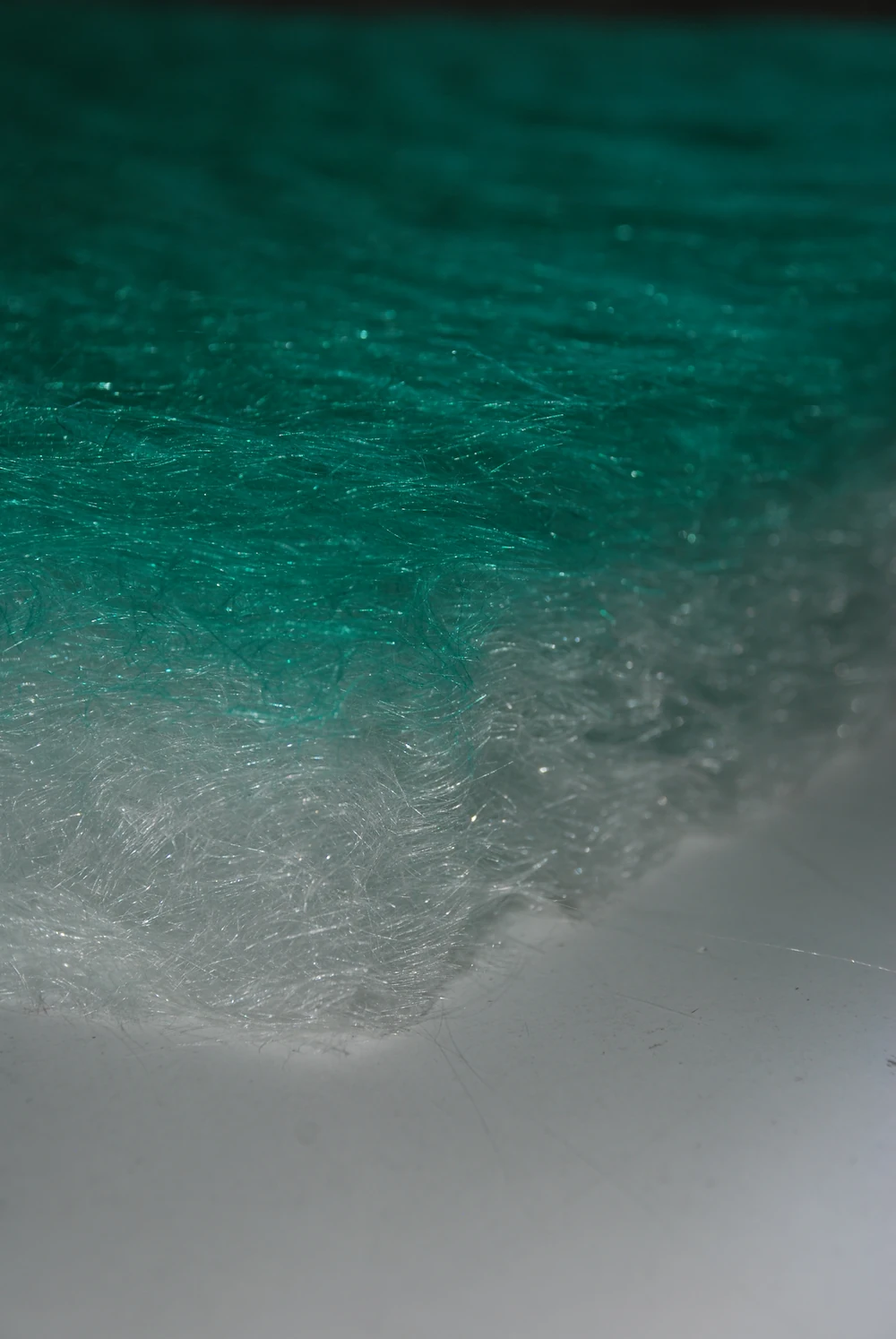
- Green Side (Air Intake Side): Must face toward the grate surface (upward, toward the incoming paint spray). The fiber structure is coarser here to trap heavy paint droplets deep within the media.
- White Side (Air Outlet Side): Must face downward (toward the exhaust duct and fan). The fibers on this side are extremely dense, filtering fine paint mist to ensure clean air evacuation.
3. Paint-Stop Floor Filter Technical Data Table
Below are technical parameters fully compliant with your facility's technical specifications and ISO 16890 / EN 779 standards:
| Technical Parameter | Measurement / Standard Value | Industrial Explanation & Importance |
|---|---|---|
| Filtration Class (EN 779) | Class G3 / EU3 | Standard for coarse paint mist and overspray capture |
| ISO 16890 Equivalent | ISO Coarse 60% | High capture performance for liquid particles |
| Weight / Grammage | 220 - 240 g/m² (±5%) | Optimum air permeability and non-collapsible structure |
| Thickness | 2 inches (50 mm) / 3 inches (75 mm) | Standard booth type: 50 mm (2 inches) |
| Initial Pressure Drop (Clean Δp) | 25 - 30 Pa (at 1.5 m/s air velocity) | Low air resistance, preventing fan motor strain |
| Recommended Final Pressure Drop | 250 Pa | Upper limit resistance for filter replacement period |
| Paint Holding Capacity | 3,500 - 4,700 g/m² | High holding saturation ensuring long service life |
| Temperature Resistance | Maximum 180°C | High thermal resistance during curing / baking phase |
| Fire Class | DIN 53438 - F1 / K1 | Flame-retardant safe structure against solvent vapors |
4. Paint-Stop Replacement Period and Maintenance Criteria
Floor filters should be replaced every 60 to 100 operating hours on average, depending on paint concentration in the environment, or when the top surface becomes completely coated and hardened with dried paint. A hardened filter blocks airflow and disrupts booth pressure balance.
5. Frequently Asked Questions (FAQ)
Can a ceiling filter be used instead of a Paint-Stop floor filter?
No. Ceiling filters clog within a few hours under heavy paint mist due to their tacky resin structure, halting air exhaust. Floor filters, on the other hand, are manufactured from a fiberglass fiber matrix designed to store paint deep within the media.
Do you supply custom cut-to-size pieces according to our required dimensions?
Yes. As Efe Boyahane, we can dispatch orders in full rolls (0.75m, 1m, 1.5m, 2m x 20m) or prepare and deliver cut-to-size pieces tailored precisely to your booth floor grate dimensions.
Does the Paint-Stop filter perform well with water-based paints?
Yes. Because fiberglass material is structurally unaffected by moisture and water, it maintains its structural integrity in both solvent-based and water-based wet painting applications.